Saturday, May 9, 2015

Auto Tour - 05/09/25 - Big Bend NP, TX

Saturday – May 9, 2015
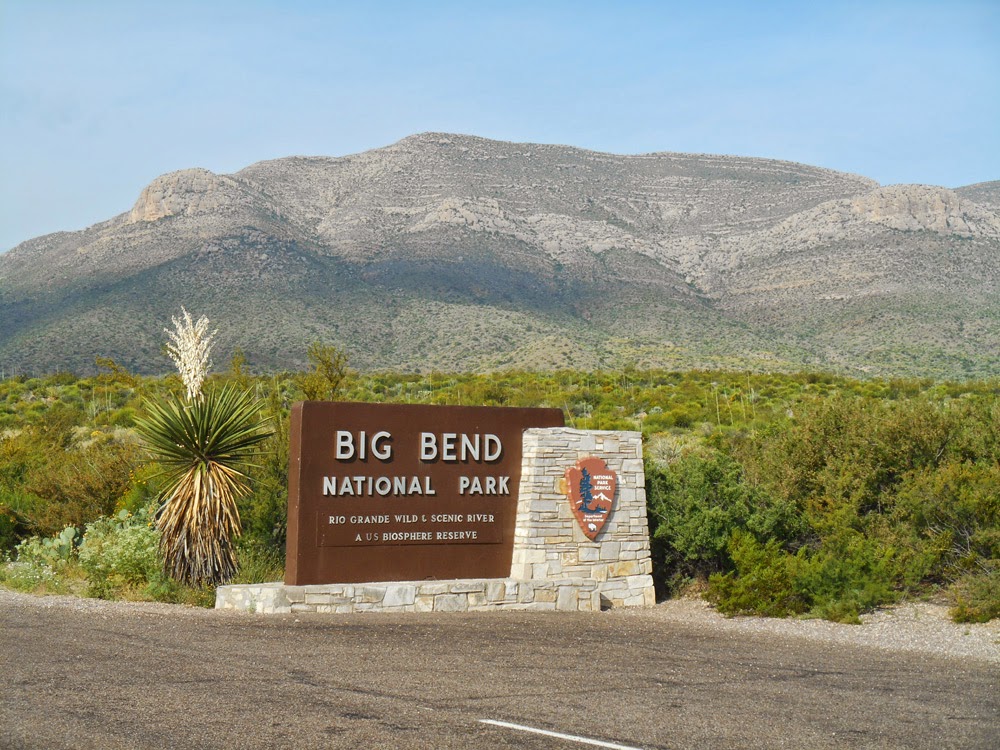
Big Bend National Park
Big Bend National Park, Texas

Another hot day at Big Bend National Park with the temperature hitting 103 degrees. We decided this would be the perfect day to do an auto tour of the park in the comfort of our air-conditioned Ford E-150 Cargo Van.

We started the auto tour from our campsite at the Rio Grande Village Campground, elevation 1,850 feet, with stops at the following locations:

  • Panther Junction Visitor Center – Elevation 3,750 feet
  • Chisos Basin – Elevation 5,400 feet
  • Castolon – Cottonwood Campground – Elevation 2,169 feet
  • Santa Elena Canyon Overlook
  • Study Butte

The drive up to Chisos Basin allows the visitor to experience the transition between arid desert and cooler mountain habitats. This scenic, winding road rises over two thousand feet above the desert floor, it offers vistas of the mountain peaks and the erosion-formed basin area.

A portion of the auto tour took us on the Ross Maxwell Scenic Drive. This drive highlights the geologic splendor Big Bend is famous for, and offers many scenic overlooks and exhibits along the way. At Santa Elena Canyon, limestone cliffs rise 1,500 feet above the Rio Grande River.

Big Bend National Park encompasses over 800,000 acres. From an elevation of less than 1,800 feet along the Rio Grande to nearly 8,000 feet in the Chisos Mountains, Big Bend includes massive canyons, vast desert expanses, forested mountains, and an ever changing Rio Grande River.

Big Bend National Park represents one of the last remaining wild corners of the U.S. In fact, early explorers found the Big Bend Region so remote, so wild, that they called the area El Despoblado – the uninhabited land. One might feel alone in the wilderness of Big Bend, but even here the visitor is surrounded by life.

From the forests of the Chisos down to the floor of the desert, over 1,200 types of plants thrive in the park and support ecosystems full of pollinators, herbivores, and other wildlife.

  • Wild life at Big Bend National Park:
  • Black Bears – 15 to 20
  • Mountain Lions – about tow dozen
  • Javelinas – travel in packs of 10 to 25
  • Coyotes - typically solitary, but will hunt in small groups
  • Rattlesnakes – four species thrive here (Western Diamondback, Black-Tailed, Mojave, Rock)

We completed an invigorating, seven-hour tour of Big Bend National Park, logging 160 miles exploring this massive national park.

Tomorrow another adventure begins.

/
Friday, May 8, 2015

Big Bend NP - 05/08/25 - Big Bend NP, TX

Friday – May 8, 2015
Big Bend National Park
Big Bend National Park, Texas

We departed the Marfa Lights Visitor Center at 7:40 a.m. and arrived at the Rio Grande Village Campground in Big Bend National Park at 10:45 a.m.

We were surprised to see there were only about five tent campers in this 100-campsite campground. We pretty much had the pick of any campsite we wanted. We chose a nice shady one and set up camp.

What a difference a few hundred miles and 3,000 feet lower elevation can make! When we departed the Marfa Lights Visitor Center this morning, the temperature was in the low 50’s and we were wearing our sweatshirts. The temperature here at the Rio Grande Village Campground showed 105 degrees, in the shade, on our temperature gauge this afternoon. We later learned that May and June are generally the hottest months in the park.

We struck up a conversation with a retired couple who was tent camping here. They too were struck by the hot weather here this early in the year. They decided one night was enough for them and were departing in the morning for the higher elevation and cooler weather available in Fort Davis, Texas.

We had noticed on our drive into the park that a couple of the Visitor Centers were closed for the season – having closed at the end of April.

Campground: Rio Grande Village
Camping Fee: $14.00 ($7.00 with Golden Age Pass)
Campsite: 79

Total miles traveled today: 136
Route Traveled:
East on U.S. Highway 90
South on U.S. Highway 385 to Big Bend National Park

Tomorrow another adventure begins.

Thursday, May 7, 2015

Marfa Lights Redo - 05/07/15 - Marfa, TX

Thursday – May 7, 2015
The Marfa Lights Redo
Marfa, Texas

We departed the Davis Mountains State Park, Fort Davis, Texas at 2:15 p.m. We spent the afternoon in Fort Davis, visiting the historic Jeff Davis County Library and had a late lunch at one of our favorite spots: Fort Davis Drug Store, Hotel and Restaurant.

We arrived at the Marfa Lights Visitor Center at 5:25 p.m., picked a parking space close to the west side of the Visitor Center, and set up camp for the night. We had the entire place to ourselves until other visitors started to arrive around sunset at about 8:30 p.m. By 9:00 p.m. the viewing area at the Visitor Center was packed! It was around that time that the Marfa Mystery Lights started to appear.

My camera could not capture the lights, so I found this one on YouTube.

We had visited the Marfa Lights Visitor Area Tuesday evening, and were not sure what we had seen that night were really the Mystery Lights. We decided we would come back tonight for a revisit. There was no wondering this time! Around 9:00 p.m., far off in the distance, maybe a hundred feet in elevation, white lights would appear, individually and then in clusters, and flitter about. They would grow brighter in intensity and then disappear. All of this would happen in a matter of seconds! Soon orange and red lights joined in the dance of the Mystery Lights. Around 10:00 p.m. the Mystery Light show was pretty much over.

At about 11:00 p.m. the Marfa Lights Visitor Center was empty. We took advantage of the pitch-black night sky to do some stargazing, before returning to our Casita Trailer to spend a restful night at the Marfa Lights Visitor Center.

Campground: Marfa Lights Visitor Center
Camping Fee: Free
Campsite: Just pick a space!

Total miles traveled today: 34
Route Traveled:
South on Texas Highway 118
South on Texas Highway 17
East on U.S. Highway 90 to Marfa Lights Visitor Center

Tomorrow another adventure begins.

Tuesday, May 5, 2015

Marfa Mystery Lights - 05/05/15 - Marfa, TX

Tuesday – May 5, 2015
The Marfa Lights
Marfa, Texas

We visited Marfa, Texas this evening to view the Marfa Mystery Lights. The lights are said to appear at dusk each evening. We arrived at the Visitor Center around 7:00 p.m. It was still light, so we patiently waited with several other visitors for the sun to set. The sun set at around 8:30 p.m. Around 9:00 p.m. we started to see white and red lights dancing about in the distance. Some visitors who had witnessed the lights on previous visits said those were not the lights. Others were not convinced. We will make a return visit on Thursday night to judge for ourselves what we see. We will spend the night there in our Casita Trailer, so we will have plenty of time to observe the lights.

For generations the mysterious Marfa Lights have defied explanation of their true nature. The Marfa Mystery Lights are visible on many clear nights between Marfa and Paisano Pass as one looks towards the Chinati Mountains. The lights may appear in various colors as they move about, split apart, melt together, disappear and reappear.

The earliest reported sighting was in 1883 when a young cowhand, Robert Reed Ellison, saw a flickering light while he was driving cattle through Paisano Pass and wondered if it was the campfire of Apache Indians. He was told by other settlers that they often saw the lights, but when they investigated they found no ashes or other evidence of a campsite.

Cowboys herding cattle on the prairies noticed the lights and in the summer of 1919 rode over the mountains looking for the source, but found nothing. During World War II pilots training at the nearby Marfa Air Field looked for the source of the elusive lights from the air, again with no success.

Apache Indians believed these eerie lights to be stars dropping to the earth.

Many viewers have theories ranging from scientific to science fiction as they describe their ideas of aliens in UFO’s, ranch house lights, St. Elmo’s fire, or headlights from vehicles on U.S. Highway 67, the Presidio highway. Some believe the lights are an electrostatic discharge, swamp gases, moonlight shining on veins of mica, of ghosts of Conquistadors searching for gold.

An explanation as to why the lights cannot be located is an unusual phenomenon similar to a miracle, where atmospheric conditions produced by the interaction of cold and warm layers of air bend light so that it can be seen from afar, but not up close. Whatever they are, they have a simple, mysterious beauty all of their own.

The mystery of these lights still remains unsolved.

In recent years the lights have become a tourist attraction. The Texas Highway Department has constructed a roadside Visitor Center parking area nine miles east of Marfa on U.S. Highway 90 for visitors to view the curious phenomenon.

We departed Marfa at 9:30 p.m. This region of Texas has the darkest skies, due to minimal light from the surrounding small towns. The roads at night in this area are fraught with danger from wild animals lurking about and crossing the roads. So, the 30-mile drive to our campground was slow and on high alert for any animal activity within the area of our headlights.

Tomorrow another adventure begins.

Monday, May 4, 2015

Skyline Drive - 05/04/15 - Fort Davis, TX

Monday – May 4, 2015
Skyline Drive
Davis Mountains State Park
Fort Davis, Texas

We drove the Skyline Drive today. The entrance to the Skyline Drive begins within the campground. It is a steep, winding, paved road that takes the visitor to the top of the mountain at an elevation of 5,600 feet. The route is about 2 miles in length and we were surprised to see a few people walking it, one of them was an enterprising older man, with only one leg, on crutches!

The view at the top of the mountain overlooks other mountain vistas, grazing land, cattle ranches and the town of Fort Davis far off in the distant valley below.

It was quite windy at the top of mountain, with wind gusts probably in the area of 30 mph. Quite a contrast from the campground, about 1,000 feet below, where the wind was relatively calm.

During our evening walk through the campground we met a very nice couple, Paul and Susan from North Carolina. They just started full-timing in a Class C motorhome, after selling their home near the city of Charolette. They were eager for information on where to camp and places of interest to visit. We shared with them some of our recommendations as well as providing them with the link to our blog. We wished them safe travels as they embark on their journey of a lifetime.

As the day came to an end, a large, dark, moisture-laden cloud appeared overhead, releasing a few sprinkles of rain. Soon thereafter, a double rainbow appeared.

Tomorrow another adventure begins.

Sunday, May 3, 2015

McDonald Observatory - 05/03/15 - Fort Davis, TX

Sunday – May 3, 2015
McDonald Observatory
Fort Davis, Texas

We visited the McDonald Observatory today. We had planned to visit the observatory in October 2014, but severe storms at that time, throughout the south and southwest, forced us to alter our route to a northerly route to travel to the southwest.

The McDonald Observatory is an astronomical observatory located on Mount Locke in the Davis Mountains of West Texas, (near Fort Davis) with additional facilities on Mount Fowlkes, approximately 1.3 miles to the northeast. The high and dry peaks of the Davis Mountains make for some of the darkest and clearest night skies in the region and provide excellent conditions for astronomical research.

McDonald Observatory was operated under contract by the University of Chicago until the 1960s, when control was transferred to the University of Texas at Austin. The site is primarily funded through two special items in the Texas state budget: the McDonald Observatory line item and the CASA (Center for Advanced Studies in Astronomy) line item.

The McDonald Observatory was originally endowed by the Texas banker William Johnson McDonald (1844–1926). He left about $1,000,000 - the bulk of his fortune - to the University of Texas to endow an astronomical observatory. The provision of the will was challenged by McDonald's relatives, but after a long legal fight, the University received about $800,000 from the estate and construction began at Mount Locke.

The then-unnamed Otto Struve Telescope was the first large telescope built at the observatory and was dedicated on May 5, 1939, and at that time was the second largest telescope in the world. It is located on Mount Locke at an altitude of 6,790 feet.

The Hobby-Eberly Telescope (HET), dedicated in late 1997, is located on the summit of Mount Fowlkes at an elevation of 6,660 feet. It is operated jointly by the University of Texas at Austin, Pennsylvania State University, Ludwig Maximilians University of Munich, and Georg-August University of Göttingen. As of 2012, the HET is tied with the similar Southern African Large Telescope (SALT) as the fifth largest telescope in the world.

Currently, the observatory operates four research telescopes and one visitor telescope at its West Texas site:

  • 9.2 m (362 inch) Hobby-Eberly Telescope on Mount Fowlkes (1997)
  • 2.7 m (107 inch) Harlan J. Smith Telescope on Mount Locke (1968)
  • 2.1 m (82 inch) Otto Struve Telescope on Mount Locke (1939)
  • 0.8 m (31 inch) large format imaging telescope on Mount Locke]
  • 0.9 m (35 inch) telescope used for visitor programs on Mount Locke

The observatory produces StarDate, a daily syndicated radio program consisting of short segments related to astronomy that airs on many National Public Radio affiliates.

Research at the McDonald Observatory encompasses a wide variety of topics and projects, including planetary systems, stars and stellar spectroscopy, the interstellar medium, extragalactic astronomy, and theoretical astronomy.

The Frank N. Bash Visitors Center, located between Mount Locke and Mount Fowlkes, includes a café, gift shop, and interactive exhibit hall. The Visitors Center conducts daily live solar viewings in a large theater and tours of the observatory's largest telescopes. It also hosts evening star parties, every Tuesday, Friday, and Saturday, which allow visitors to look through numerous telescopes of various sizes in the Telescope Park.

There are special viewing nights, during which visitors can stay on-site and view directly through eyepieces on the 0.9 m, Struve (2.1m), or Smith (2.7m) telescopes, are held on a reservation-only basis. – Wikipedia